 7:59 PM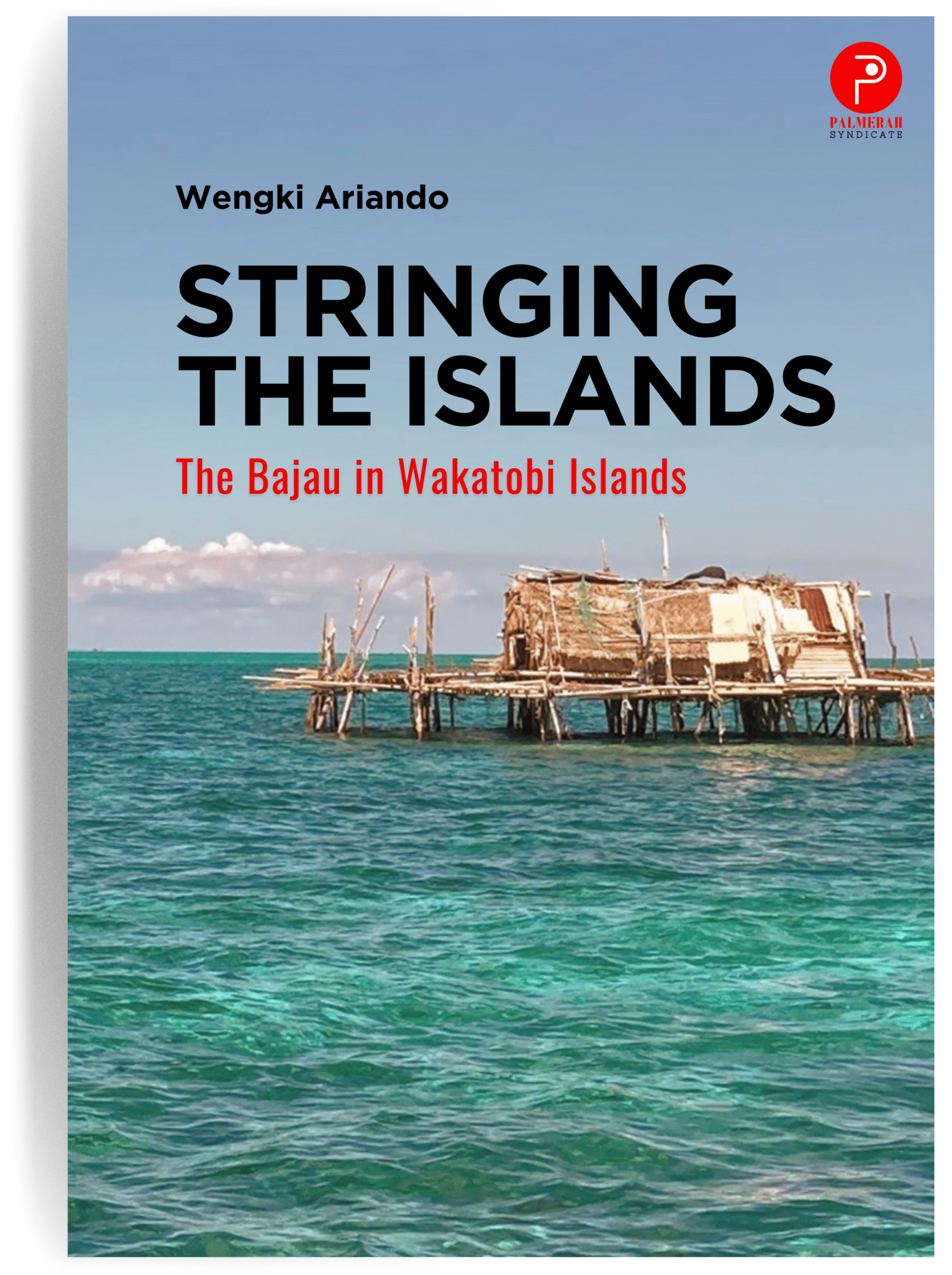
This book will thoroughly explore the Sama-Bajau group in the discussions. As an entity that values the sea as a ‘common resource’, the Bajau are acknowledged themselves – exonym “Sama” – as a customary community that upholds the value of freedom and equality. For Sama-Bajau or Bajau (this research uses the term of Bajau), the seascape is not only for economic space but also a living and cultural space where their knowledge, spirit, and practice are entirely oriented toward the sea. In Wakatobi, the Bajau are the second-class group. Their presence is still associated with migrants, even though they have been registered as residents of Wakatobi administratively. The complexity of Wakatobi’s coastal and marine resource management often sidelined them from a governance system and cultural dichotomy.
The details presented in this book are the history and transformation of the Bajau community to the present five villages: Mola, Mantigola, Sampela, Lohoa, and Lamanggau. These villages show different intercultural adaptations and livelihood diversifications. Interactions with the dominant society and social construction with the islander (Bagai) are also narrated in this book. The detail of each chapter as follows:
Chapter 1: The Bajau in Wakatobi: A Journey
Chapter 2: The Bajau Origins and Maritime Cultures
Chapter 3: The Bajau Wakatobi in Geographical Settings
Chapters 4-9: Community Profiles
Chapter 10: The Bajau Sacred Areas in Wakatobi
Chapter 11: The Mobility of Bajau: From Past to Current
Chapter 12: Move or Removed: Contesting the Bajau Maritime Culture in Wakatobi
This research book by Dr. Wengki Ariando makes a significant contri-bution to the study of sea nomads. Through meticulous ethnographic fieldwork, Dr. Ariando bridged empirical information from the past with contemporary issues, examining the complex interplay between tradition and modernity. The book highlights the challenges and opportunities faced by the Bajau people in Wakatobi Regency, Indonesia. It provides a nuanced understanding of the Bajau’s distinc-tive cultural heritage, their profound connection to the sea, and their ongoing struggle to preserve their identity amidst rapid social and environmental changes. Stringing the Islands is an essential read for researchers, policymakers, and anyone interested in the past, present, and future of sea nomads. (Assoc. Prof. Dr. Narumon Arunotai, Sea Nomads Researcher at Chulalongkorn University Social Research Institute
Stringing The Islands isn’t just a book; it’s a lifeline to our forgotten history, a mirror reflecting our struggles, and a beacon guiding our uncertain future of Bajau in Wakatobi. It’s a testament to our resi-lience, our unwavering connection to the sea, and our enduring spirit. Every page of this book captures the essence of our nomadic existence, our deep-rooted traditions, and the intricate dance between human and nature. It paints a vivid picture of our lives, from the serene beauty of our coral reefs to the harsh realities of poverty and dis-placement. As the world changes around us, we, The Bajau, are caught in a tempestuous sea. The once-abundant waters that sustained us for generations are now threatened by dozens of development challenges. Our traditional way of life is under siege, and our future hangs in the balance. This book is a call to action. It’s a plea for understanding, empathy, compassion, and support. It’s a reminder that we, The Bajau are not just a relic of the past, but a vibrant community with a rich cultural heritage and a bright future. (Dr. Ir. Abdul Manan, M.Sc., Bajau Elder from Wakatobi and Lecturer at Faculty of Forestry and Environment, Halu Oleo University)
- Judul: Stringing the Islands: The Bajau in Wakatobi Islands
- Penulis: Wengki Ariando
- Tahun: November 2025
- Halaman: xii + 149 hlm
Ulasan
Belum ada ulasan.